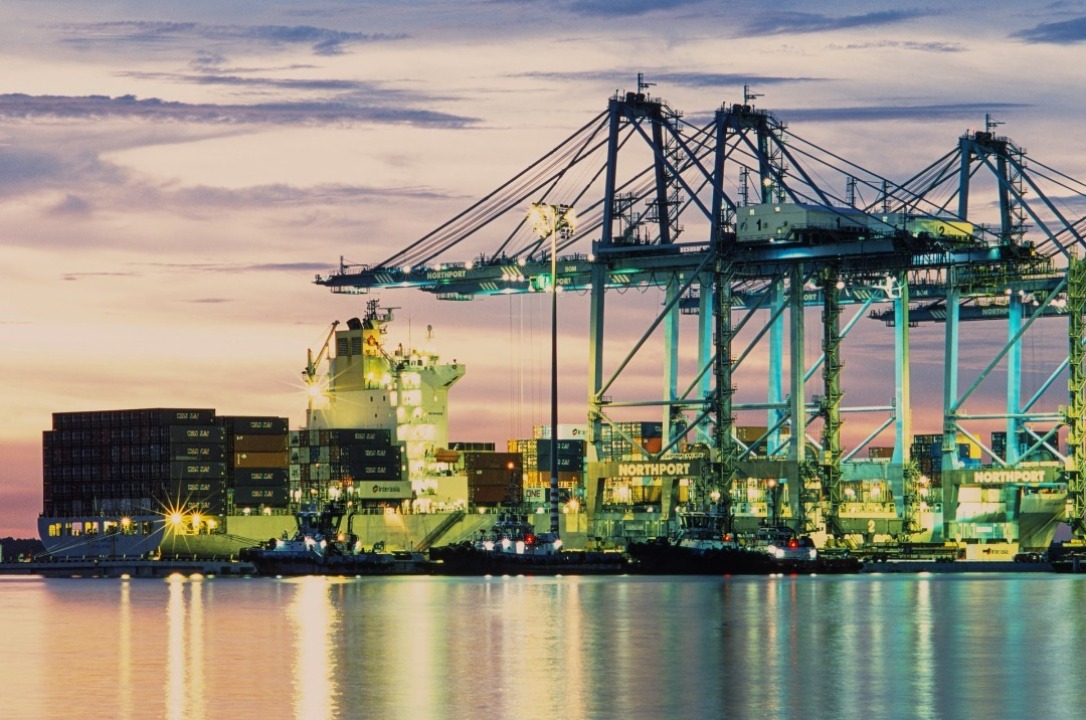
Port Klang, located in the state of Selangor, is the largest and busiest port in Malaysia.
It is situated on the west coast of Peninsular Malaysia and serves as a major gateway for international trade and commerce.
History of Port Klang
Port Klang's history dates back to the late 19th century, when it began as a modest fishing village. It was during the British colonial period that the port started to evolve into a significant trading hub.
In 1901, the Selangor government officially designated it as the state's port. Under British rule, Port Klang experienced substantial growth, with key developments in infrastructure and facilities.
Today, Port Klang serves as Malaysia's main maritime gateway. Originally known as Port Swettenham during colonial times, it was renamed Port Klang in July 1972.
As the largest port in the country, it lies approximately 6 kilometres southwest of Klang town and 38 kilometres southwest of Kuala Lumpur, the nation's federal capital.
Modern Day Port Klang

Port Klang, supported by Northport, Westport, and the Port Klang Free Zone (PKFZ), is the 12th largest container port globally, connecting Malaysia to over 350 ports in 130+ countries.
Port Klang Authority (PKA)
PKA oversees trade facilitation, port planning, regulatory functions, and asset management.
A feasibility study is underway for a 3rd terminal on Carey Island, aimed at enhancing Port Klang’s status as a regional maritime and logistics hub.
Northport
Northport serves as a multipurpose port handling various types of cargo, including containers, bulk liquids, and general cargo. It also has specialised facilities for the handling of timber.
- Container Wharf: 2.6 km quay length, 11 berths, 33 quay cranes, and 174 prime movers.
- Conventional Wharf: 1.5 km quay length, handling dry bulk, break bulk, and liquid bulk.
- Vehicle Transit Centre: Annual capacity of 210,000 units.
- Container Yard: 9.9 million sq. ft., 5.6 million TEU capacity.
- Warehousing & Logistics: 2.8 million sq. ft. warehouse space with value-added services.
Southpoint
Southpoint has been in operation for over 120 years, specializing in handling a diverse range of cargo such as steel products, palm oil products, and biomass.
- Terminal Features: Four multi-purpose berths with a total quay length of 1.05 km and a depth alongside ranging from 5.5 to 10 meters.
- Cargo Handling: Supports displacement tonnage of up to 6,000 and includes two liquid berths for specialized cargo handling.
- Liquid Tank Facilities: Managed by tenants for a variety of liquid products, located within the extended area of the port terminal.
Westport
Westport is a deep-water port with advanced logistics and automation, supporting global shipping alliances. Key features:
- Container Wharf: 5.8 km straight liner quay, 17.5 m draft, 66 quay cranes, and a 14 million TEU capacity.
- Inter Terminal Transfer (ITT): Efficient transshipment container movement.
- Expansion Land: Future expansion of container terminals CT10 to CT13 over 30 years.
Port Klang Free Zone (PKFZ)
Port Klang Free Zone (PKFZ) is a duty-free commercial and industrial zone adjacent to Westport, offering:
- Leased Office Buildings: 5.64 million sq. ft. of customizable office space.
- Open Land: 628 acres available for long-term lease, suited for logistics, manufacturing, and warehousing.
- Light Industrial Units (LIU): 2.8 million sq. ft. of pre-built warehouses designed for regional cargo distribution.
Importance of Port Klang Hub
Port Klang hub is a vital component of Malaysia's economy, facilitating over 90% of the nation's international trade. As a key hub for imports and exports, it connects Malaysia with global markets.
Its economic impact significantly boosted employment and growth in nearby areas.
Thousands of jobs are supported by industries linked to Port Klang, including transportation, warehousing, and manufacturing.
The port hosts several industrial parks, such as Bandar Sultan Suleiman Industrial Park, Perdana Industrial Park, and Pulau Indah Industrial Park.
They cater to sectors like logistics, electronics, food production, agrochemicals, and automotive.
Port Klang serves as a strategic hub to numerous leading companies such as Flash Express, Ikea, Samsung, Sime Darby Oils, F&N Dairies, Behn Meyer Agricare, and Volvo.
Connectivity to Public Access
Port Klang boasts excellent accessibility to major highways such as NKVE, Federal Highway, KESAS, SKVE, ELITE, and NNKSB.
The completion of the West Coast Expressway (WCE) will further link Taiping and Banting.
This strategic connectivity positions Port Klang as a prime industrial hub, attracting numerous companies to invest in and lease industrial properties here.
Additionally, Port Klang offers seamless connectivity to other key industrial areas, including Telok Gong, Telok Panglima Garang, Rantau Panjang, Pandamaran, and Banting.
Future Developments
The East Coast Rail Link (ECRL) is poised to enhance the connectivity between Westport (hence Port Klang town) and Northport significantly.
Additionally, it will link Port Klang with the East Coast states of Malaysia: Pahang, Terengganu, and Kelantan.
This future connection between Port Klang and Kuantan Port will allow Port Klang to leverage the 21st Century Maritime Silk Road, a crucial element of China's Belt & Road Initiative.
Moreover, the burgeoning ASEAN market and the 1.9 billion-strong global halal market will further drive demand for industrial properties in Port Klang.
Industrial Malaysia and Port Klang

Port Klang is crucial to Malaysia's economy, boosting international trade and creating jobs. Its strategic location and advanced facilities enhance its role in global supply chains.
With upcoming developments, its status as a logistics hub is expected to grow.
Industrial Malaysia offers expertise in the industrial landscape of Port Klang, providing access to premium properties.